
Globally, health ministers are facing an increasingly constrained financing environment: official development assistance is declining, debt burdens are rising, and fiscal pressure is tightening–even as the health needs of women, children, and adolescents continue to grow.
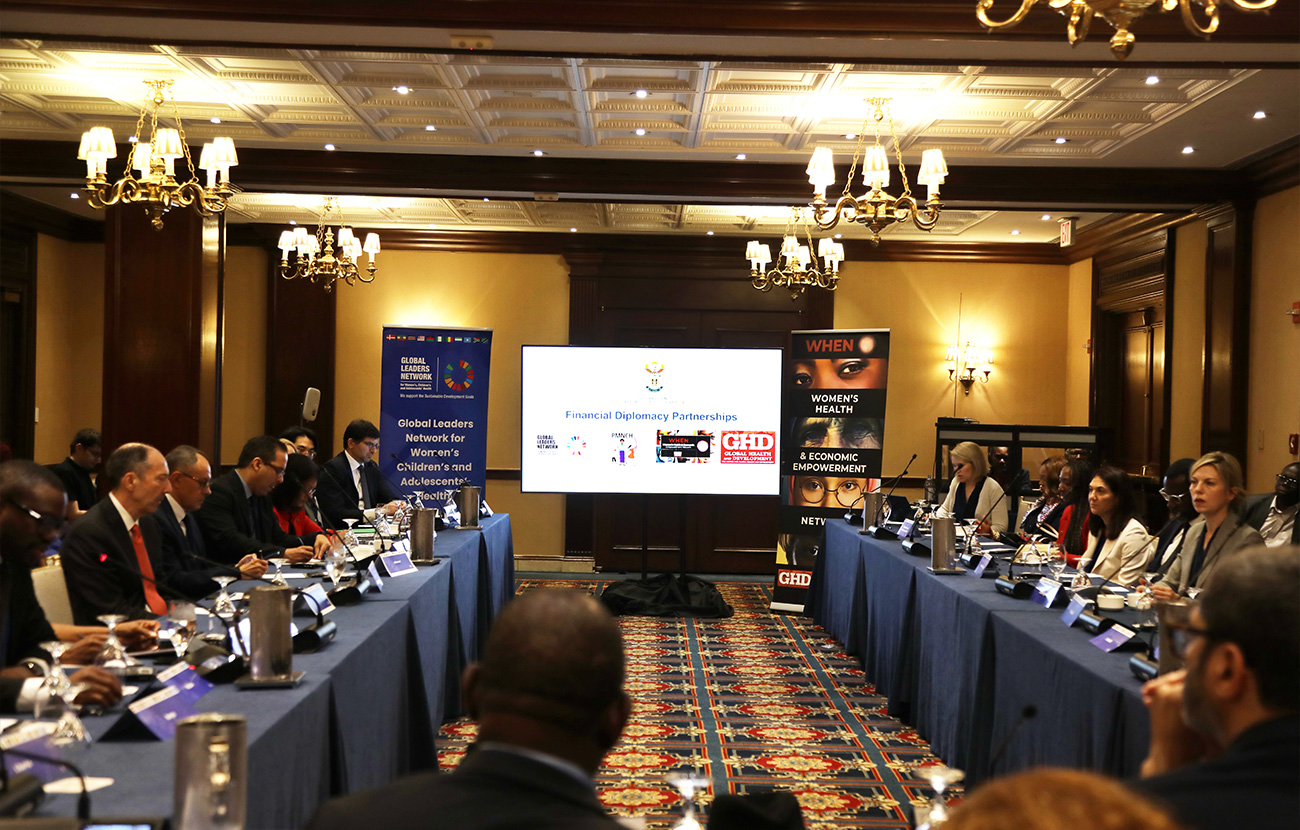
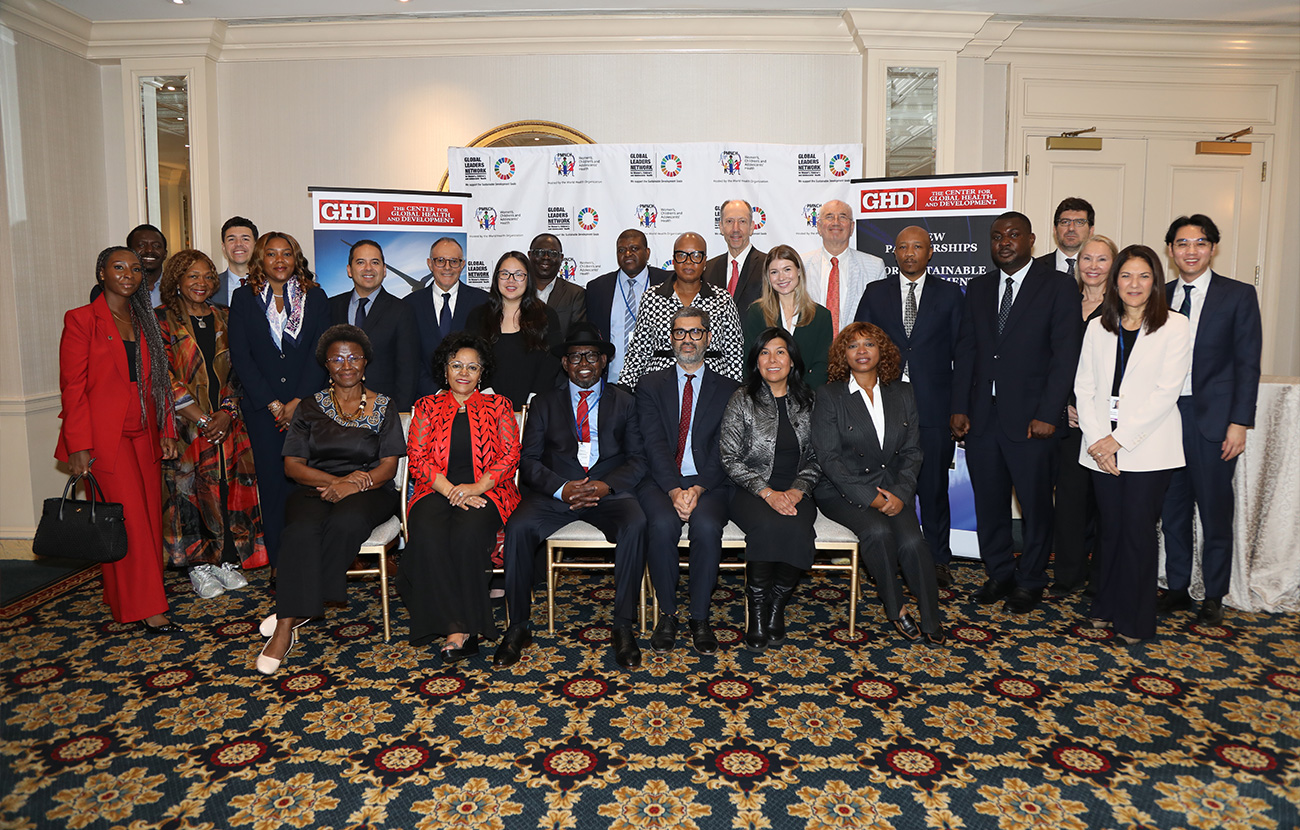
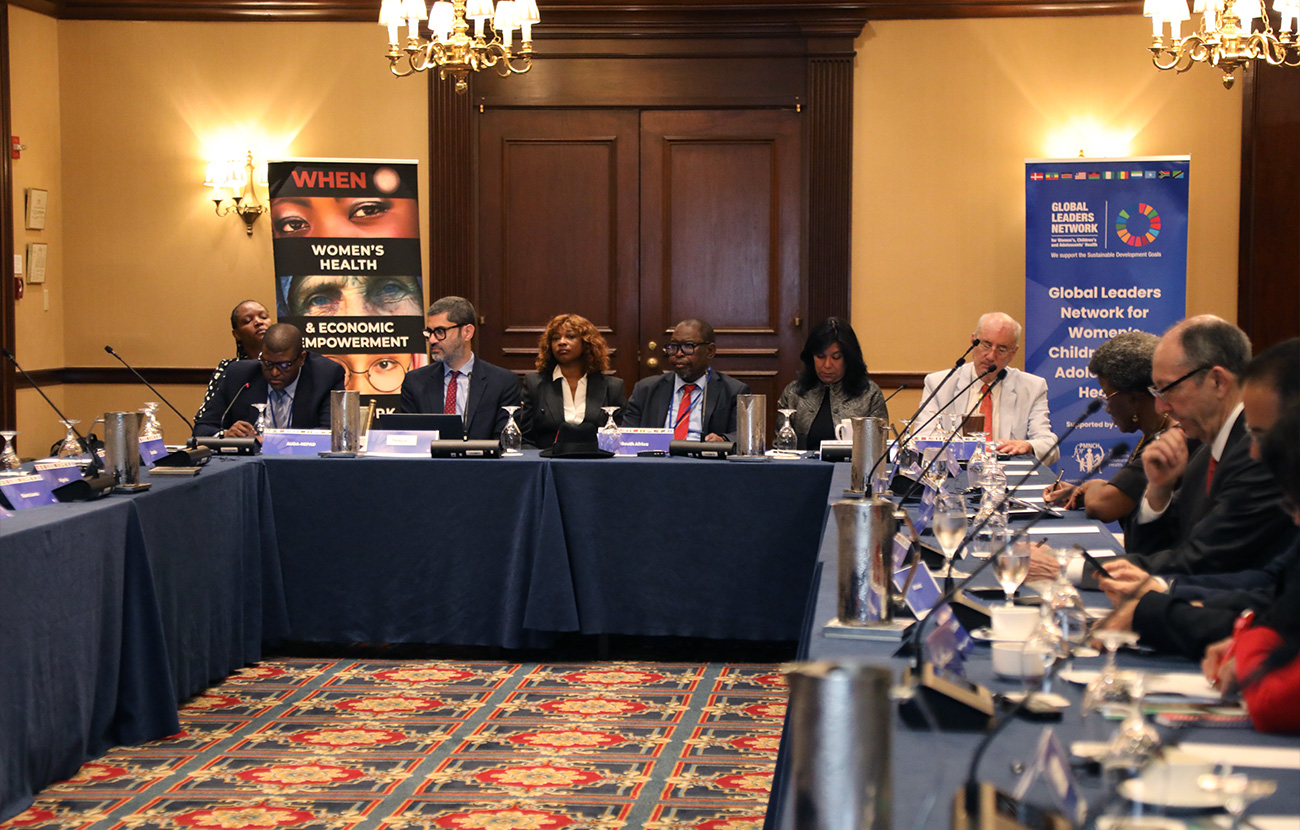
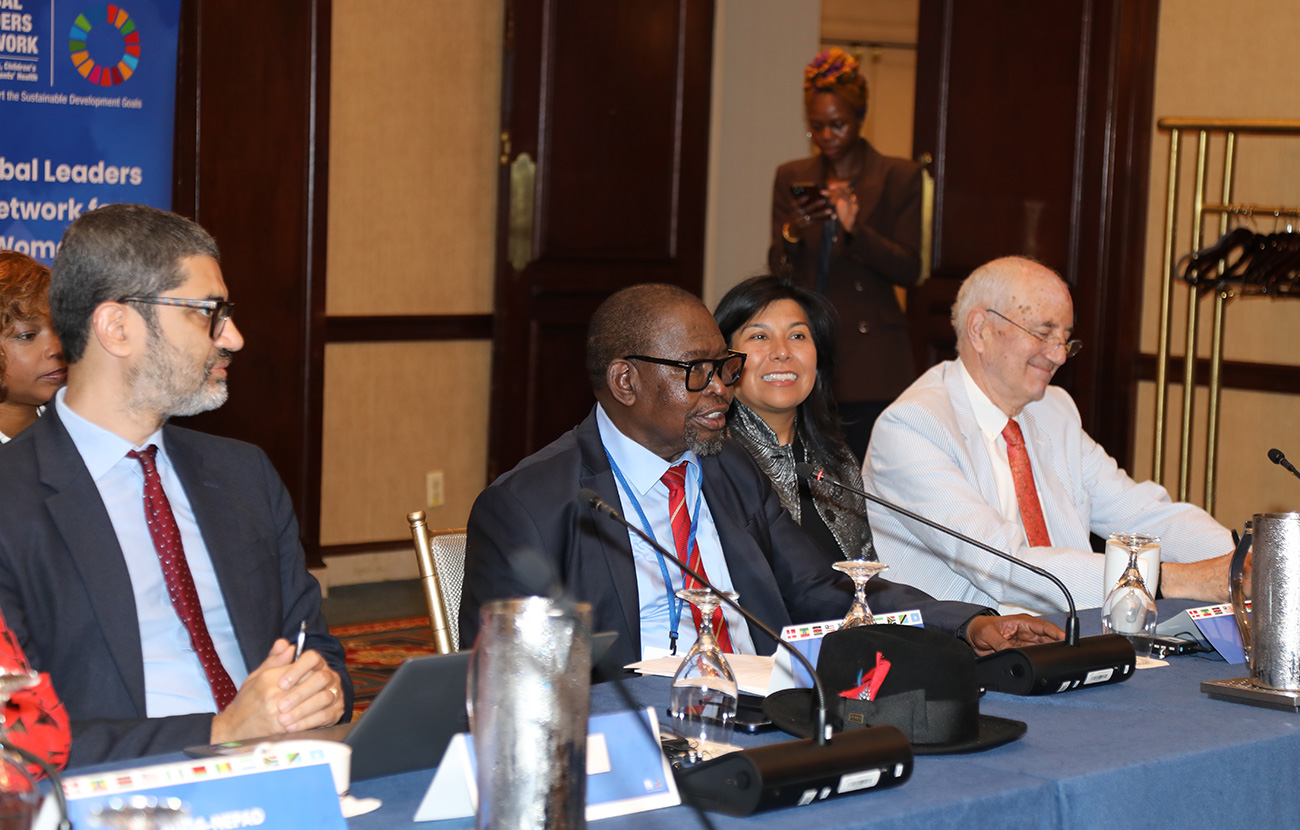
On the margins of the World Bank–IMF Spring Meetings in Washington, D.C., Members of the Global Leaders Network for Women’s, Children’s, and Adolescents’ Health (GLN), in partnership with the Women’s Health and Economic Empowerment Network (WHEN) and the Partnerships for Maternal, Newborn and Child Health (PMNCH), worked with governments, development finance institutions, foundations, investors, and philanthropists to structure and deploy financing for women’s, children’s, and adolescents’ health.
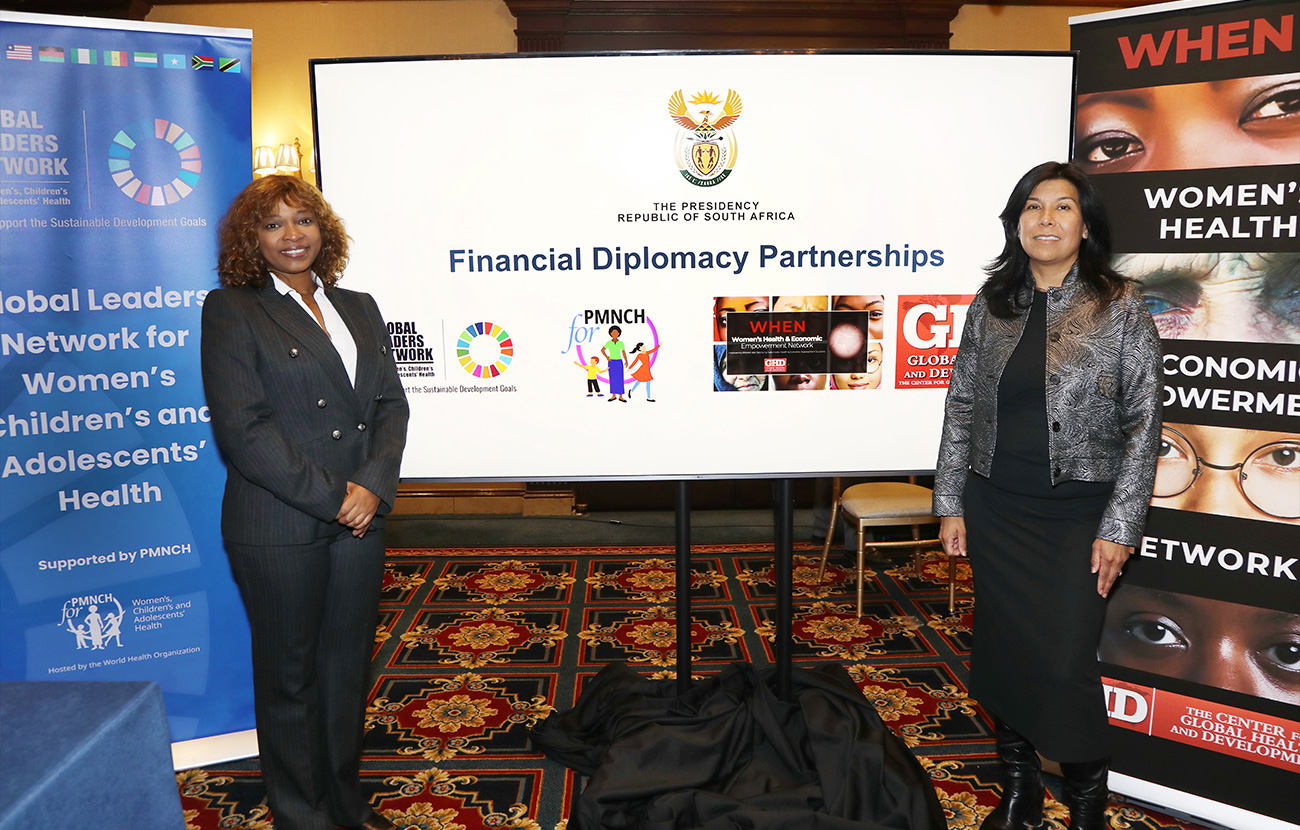
The engagement included senior country representatives from GLN Member countries—including South Africa, Malawi, Indonesia, and Botswana—alongside development finance institutions, private sector investors, and global health leaders to advance the WHEN–GLN Financial Diplomacy Series. Across two working sessions, efforts centered on structuring and deploying blended finance aligned with country-led investment priorities, demonstrating that sustainable progress on women’s, children’s, and adolescents’ health requires not just political will, but a financing architecture to match.
This includes the development of blended finance vehicles, pooled investment structures, and country-level platforms designed to deploy capital at scale.
Pressure on Global Health Systems
Official development assistance is declining at a pace that threatens decades of progress. Rising debt burdens constrain fiscal space in many countries. Demographic trends are shifting the burden of health spending. And the consequences fall most heavily on the populations that the GLN is committed to serving: women, children, and adolescents.
Maternal and newborn mortality, adolescent health outcomes, access to sexual and reproductive health services, surgical care, and women’s cancer treatment remain areas of acute concern across the globe. These health outcomes are particularly sensitive to fluctuations in both domestic and external financing, making the financing architecture a matter of population health impact.
The current landscape reveals a critical gap: governments have the political commitment to strengthen women’s, children’s, and adolescents’ health. What has been missing is the financing infrastructure to translate it into sustainable, systems-level change.
Across its working sessions on the sidelines of the World Bank–IMF Spring Meetings, the GLN Financial Diplomacy Series produced concrete outcomes:
- Financing Constraints Alignment: Senior country representatives aligned on the key constraints on health financing for women, children, and adolescents—including insufficient domestic resource mobilization, declining ODA, and misaligned capital structures.
- Financing Architecture Framework: A blended finance framework was structured to align concessional public capital, government resources, and private investment to mobilize and deploy capital at scale.
- National Health Insurance and Financial Protection: Participants reaffirmed the centrality of strengthening national health insurance systems to reduce out-of-pocket expenditures and prevent catastrophic health spending, particularly for the most vulnerable populations—women, adolescents, and workers in the informal sector.
- Multi-Stakeholder Call to Action: A clear mandate was established to align capital and accelerate deployment across development finance institutions, the private sector, and global partners.
The session articulated clear financing results: sustainable health systems require the strategic alignment and structuring of concessional, public, and private capital. This is not a call for more capital—it is a call for capital that is structured and deployed effectively.
Blended finance, through combining catalytic public grants with concessional loans, guarantees, and private equity, offers a proven pathway to mobilizing institutional capital that would otherwise remain untapped. By de-risking investments for the private sector and establishing credible payer pathways through national health insurance systems, governments can unlock significant capital for health infrastructure, workforce development, and service delivery.
Fiscal constraints are real, but the challenge is not the availability of capital—it is how that capital is structured and deployed. Through the GLN’s Financial Diplomacy Series, senior country representatives are working to build that structure.
The constraint is not capital availability—it is the absence of well-structured, scalable financial vehicles.
Political Commitment Must Translate to Financial Architecture
The GLN Heads of State and Government have made a clear political commitment to advancing women’s, children’s, and adolescents’ health. Yet as one senior country participant noted during the discussions, political declarations are necessary but not sufficient. What distinguishes this moment is the commitment to move from political commitment to concrete financing mechanisms—structures that are built for sustainability.
Domestic Resource Mobilization Remains Critical
While the session emphasized blended finance, ministers also stressed the indispensable role of domestic resources. Strengthening tax systems, reducing out-of-pocket expenditures, and expanding health insurance coverage are foundational. Blended finance is a tool to complement and enhance these efforts—not to replace them. Countries that build strong domestic financing systems will be best positioned to attract and leverage catalytic capital from development finance institutions and private investors.
Women, Children, and Adolescents Bear the Greatest Burden
The outcomes emphasizes repeatedly that the consequences of financing shortfalls “fall most heavily on women, children, and adolescents.” This translates to preventable maternal mortality, untreated adolescent health conditions, and catastrophic health spending that pushes families into poverty. The financing architecture being built through the GLN’s efforts is designed with this reality in mind.
The GLN Financial Diplomacy Series launches a period of intensive action. GLN member country representatives are committing to:
- Engagement with Development Finance Institutions: Priority country teams will structure country-level blended financing vehicles with multilateral development banks and bilateral partners aligned with national health priorities.
- Private Sector Alignment: The session included private sector representatives, with follow-up focused on deploying capital into health infrastructure, supply chains, and service delivery.
- Technical Support for Investment Readiness: The GLN will deploy technical assistance to structure investment-ready platforms and financing vehicles, including financial models, governance frameworks, and risk mitigation strategies that make blended finance structures investable.
- Monitoring and Accountability: Ministers committed to translating political commitment into measurable progress, with regular reporting on domestic resource mobilization, health financing flows, and health outcomes for women, children, and adolescents.
- The next milestone is the World Health Assembly, where GLN members and partners will report on financing commitments and early progress toward more sustainable and diversified financing for women’s, children’s, and adolescents’ health. The focus now shifts from alignment to execution.
Global Leaders Network for Women’s, Children’s and Adolescents’ Health (GLN)
Initiated in 2023, the Global Leaders Network is the first and only Global South-led global health diplomacy initiative to support the attainment of the 2030 Sustainable Development Goals related to women, children and adolescents. GLN is creating a pathway towards the reduction of maternal, neonatal, and adolescent mortality rates by a third in network countries by 2030. Learn More
Women’s Health and Economic Empowerment Network (WHEN)
The Women’s Health and Economic Empowerment Network (WHEN) is a blended finance and innovation platform dedicated to expanding access to healthcare, capital, and opportunity for women worldwide. WHEN structures and deploys financing vehicles for health and related sectors—designing blended finance approaches that mobilize and align public, concessional, and private capital to deliver sustainable health outcomes. Learn More
Partnership for Maternal, Newborn and Child Health (PMNCH)
Established in 2005, The Partnership for Maternal, Newborn & Child Health (PMNCH) is the world’s largest alliance for women’s, children’s and adolescents’ health and well-being, with more than 1,400 partner organizations working together through 10 constituency groups: partner governments, donors and foundations, NGOs, adolescent and youth groups, private sector organizations, health professional associations, academic and research institutions, global financing mechanisms, inter-governmental organizations, and UN agencies. PMNCH is hosted by the World Health Organization, based in Geneva. Learn More
WHEN (Women’s Health & Economic Empowerment Network)
Taylor Bourne, Director of Programs
taylor@when-worldwide.com | +1 (202) 467-8370